A Long Flight Desert Dangers: What Interrupts a Flight and How to Handle It
Zombies at loot stops, lightning, tornadoes and hard landings are what actually interrupt long flights in A Long Flight — what to do about each, and how to prepare before the desert stretch.
In A Long Flight, the desert is part of the route, but no desert-specific hazard has been shown — what interrupts long flights happens everywhere along it: zombies at your landing stops, lightning, tornadoes and damage from hard landings or collisions. Two of those you handle with a practiced routine. The other two you survive by knowing what to expect before you take off.
Quick answer
Zombies at loot stops, lightning strikes, tornadoes and hard landings or collisions are what interrupt long flights — the desert adds none of its own so far. Before flying into the desert stretch, stock the cargo room with kerosene, water and food, and carry a gun with ammo, a flashlight and enough supplies to reach the next lootable building.
Problems and fixes
Zombies block a loot building or gas station
Suggested responseGet out with the gun in hand, shoot them one by one, loot fast and take off before they respawn.
Lightning disables the engine in a storm
Suggested responsePlan a forced landing — restarting by hand, reseating the engine and a spare battery all failed in the shown incident.
A tornado passes while you are on the ground
Suggested responseNo countermeasure is shown — the plane vanished entirely and the run could not continue.
A bad landing or collision tears parts off
Suggested responseReattach them by hand on the spot: wings one at a time, then the engine cover and doors.
Birds hit the plane in mid-flight
Suggested responseKeep flying — the struck plane continued and landed afterwards.
Darkness kills visibility at night
Suggested responseFollow the road and the radar in the air; use the flashlight on the ground.
Preparing for the desert stretch
The route includes a desert stretch, and the only desert-specific preparation note the game offers so far is a negative one: the Warmjacket is for when it gets cold, and a player flying toward the desert set it aside as clothing he would not need anytime soon. Cold-weather gear is not your desert problem.
What the desert actually tests is the route's basic loop: kerosene, water and food only come from landing at buildings and stashing them in the cargo room. Before flying a long stretch, load up on:
- Kerosene in canisters for the tank
- Water and food — and drink only liquids that recover your thirst; unknown liquids can kill you ("Don't drink. You are going to die if you drink it.")
- A gun with enough ammo to clear the next stop
- A flashlight for ground work in the dark
- Useful extras that stops yield: an extinguisher, a spare wheel, medicine, bandages or a med kit, autooil and a battery
Plan stops deliberately, too. When food ran low on one run, landing at the next gas station to resupply was judged worth it. That is the real desert decision: enough fuel, food and water to reach the stops you intend to loot, and enough ammo to clear them. The scavenging guide breaks down what to carry, and the preflight checklist ties the preparation together before takeoff.
Zombies at every resupply stop
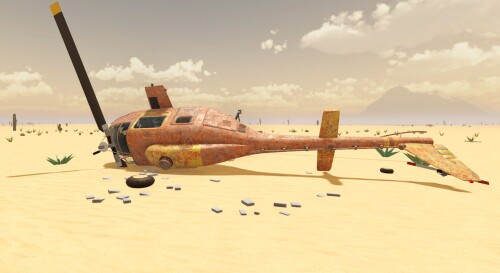
Every building worth looting — gas stations included — can have zombies waiting outside and inside, sometimes in large groups. They guard the loot: you have to kill them before you can search the building and take what is inside, whether that is kerosene, water, food, medicine or tools.
The working routine:
- Land, stop the engine and get out with the gun in hand.
- Shoot the zombies one by one.
- Search the building and load what you need into the cargo room.
- Take off again soon — zombies respawn over time at cleared sites.
That last step matters more than it sounds. Exact respawn timing is not known, so lingering at a cleared stop is how you meet the next wave. It also compresses any repair you do there: one player reattached two wings mid-stop specifically to finish before the zombies came back. Ammo belongs in the landing decision as well — low food plus plenty of ammo is exactly the situation where a resupply stop was judged worth landing for. The dangerous locations guide covers what else waits on the ground.
Lightning and night storms
Rain at takeoff is a normal sight on the route, and at night it turns serious: in one night storm the cockpit went so dark that the lights were "not helping at all", and navigation meant following the road and the radar. The bigger threat is the strike itself. A lightning hit disabled the engine in mid-flight and forced a landing, and on the ground every field fix shown failed — restarting by hand, unscrewing and reseating the engine, even trying a spare aircraft battery. The verdict was simply: the engine is dead.
No working field repair has been shown for a lightning-killed engine, so plan for the outcome rather than the fix: bring the plane down while you still control it, pick the flattest ground you can see, and treat the engine as gone instead of counting on a restart. A forced landing is a stop; being unprepared for one ends the run.
Tornadoes: the run-ender
A tornado can reach you while you are stopped on the ground near a building. In the incident shown, it took the entire plane: "Where is our plane? The plane is gone." The run could not continue. The player survived and could still loot water from the area, but nothing shown prevents this or brings the plane back. It is the one route danger with no countermeasure so far — the only preparation is knowing it exists.
Hard landings and collisions
Bad landings and collisions knock parts off the plane. One rough landing left it "a big messed up" with wings and doors off; one pillar strike tore the propeller clean off. The same dangers can also pass without harm — other hard landings ended with the plane fine, and one pillar collision broke nothing. The outcome tracks the quality of the landing, not the obstacle alone.
When parts do come off, they go back on by hand, right there: wings one at a time, then the engine cover and the doors. Do it quickly if you are at a loot stop, because zombies respawn while you work. Smoother arrivals that keep parts attached are covered in how to take off and fly.
Birds and darkness
Birds can hit the plane in mid-flight. In the flight shown, the plane kept flying and landed afterwards — an interruption to note, not an emergency on the evidence available.
Darkness is the bigger nuisance. Flying in the dark makes visibility very poor, even inside the cockpit with the lights on, so night flying means following the road and the radar; keep a flashlight in the cargo room for work on the ground. The navigation guide covers route-finding in more detail.
Fly the desert like any other leg: land when the supplies justify the stop, clear it fast, leave before respawns, and put the plane down gently. The longest flight guide covers the resupply loop in depth.
Related Guides
Longest Flight
Run the gas-station loop for kerosene, water and food, land gently and leave before zombies respawn.
Dangerous Locations
Where zombies, unknown liquids, tornadoes and lightning appear, and how to explore each dangerous place and survive.
Preflight Checklist
Reattach every detached part, fill the kerosene tank and install the ignition last before you start the engine.